
How to Say Not Feeling Well Professionally
Imagine this: you’re strategizing a killer presentation, conquering your inbox, and ready to dominate the day. But then, a rogue cough attacks, your head feels like a drum solo, and your stomach joins the chorus of discomfort.
Calling in sick isn’t a superpower, but navigating feelings under the weather while maintaining professionalism is. Fear not, warriors of the workplace! This guide equips you with the communication tools to prioritize your health while keeping your team informed and your reputation intact.
How to Professionally Say This Isn’t My Job – So, grab a cup of soothing tea (or that superhero beverage of choice) and let’s conquer feeling unwell like the workplace champions we are!

How to Say Not Feeling Well Professionally
Communicating effectively when you’re under the weather is key. Here’s how to do it right:
- Be Prompt: The sooner you inform your supervisor, the better. This allows them to adjust schedules and delegate tasks if necessary.
- Example: “I’m writing to inform you that I’m feeling unwell this morning and won’t be able to make it into the office.”
- Be Clear: Briefly explain your situation without going into graphic details.
- Example: “I’m experiencing some minor health issues and need to prioritize rest today.”
- Offer Solutions: If possible, suggest ways to stay productive while recovering.
- Example: “I’ve completed the urgent task for today and can be reached by email for any critical updates.”
- Follow Up: Keep your supervisor updated on your progress and estimated return date.
- Example: “I’ll check in again tomorrow morning to confirm my availability for the afternoon meeting.”
- Express Gratitude: Thank your supervisor and colleagues for their understanding and support.
- Example: “I appreciate your flexibility during this time.”
150+ Other Ways to Say Not Feeling Well Professionally
Here’s a diverse range of synonyms, formal phrases to say not feeling well in any professional setting:
General Discomfort
- I’m not feeling well today.
- I’m under the weather.
- I woke up feeling unwell.
- I’m not at my best health-wise today.
- I’m experiencing some health issues.
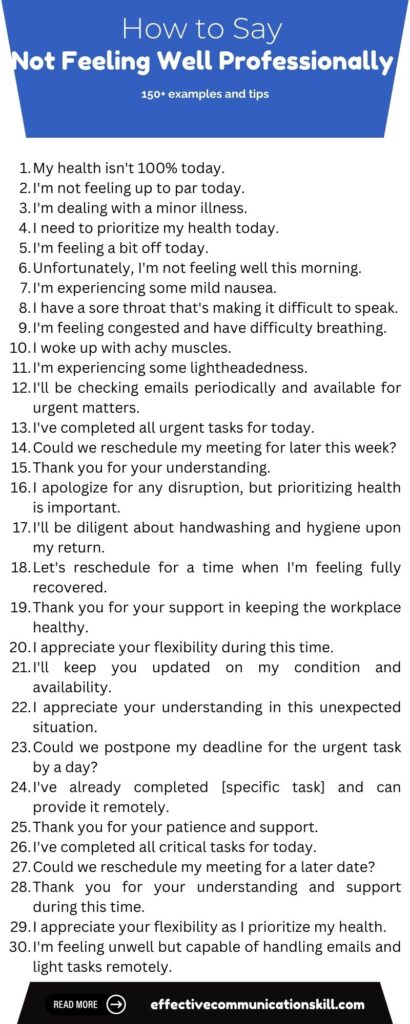
- My health isn’t 100% today.
- I’m not feeling up to par today.
- I’m dealing with a minor illness.
- I need to prioritize my health today.
- I’m feeling a bit off today.
- Unfortunately, I’m not feeling well this morning.
Specific Symptoms
- I woke up with a bad headache.
- I’m experiencing some allergy symptoms.
- I’m not feeling well due to a stomach ache.
- I have a slight fever this morning.
- A cough has come on suddenly.
- I’m feeling fatigued and need rest.
- I’m experiencing some mild nausea.
- I have a sore throat that’s making it difficult to speak.
- I’m feeling congested and have difficulty breathing.
- I woke up with achy muscles.
- I’m experiencing some lightheadedness.
Needing Time Off
- I need to take a sick day today.
- I won’t be able to come into the office today due to illness.
- I’m requesting a day off to recover from an illness.
- Unfortunately, I need to call in sick today.
- Due to health reasons, I won’t be able to attend today’s meeting.
- I’m hoping to recover quickly and return to work tomorrow.
- I apologize for any inconvenience caused by my absence.
- I’ll be checking emails periodically and available for urgent matters.
- I’ve completed all urgent tasks for today.
- Could we reschedule my meeting for later this week?
- Thank you for your understanding.
Taking Precautions
- I’m not feeling 100% to avoid spreading any potential illness.
- I’d prefer to work from home today as a precaution.
- To ensure everyone’s safety, I’ll be taking a sick day.
- I want to be well enough to contribute effectively at the meeting.
- Taking a day off now will help me recover faster and return sooner.
- It’s best for me to stay home to prevent the spread of germs.
- I apologize for any disruption, but prioritizing health is important.
- I’ll be diligent about handwashing and hygiene upon my return.
- Let’s reschedule for a time when I’m feeling fully recovered.
- Thank you for your support in keeping the workplace healthy.
- I appreciate your flexibility during this time.
Unexpected Situations
- I woke up feeling unwell and won’t be able to make it in.
- Unfortunately, a sudden illness prevents me from attending the meeting.
- I apologize, but I need to take a sick day due to unforeseen circumstances.
- An unexpected health issue has come up, requiring me to stay home.
- I’m feeling progressively worse and need to prioritize rest.
- I’ll be unavailable today due to a sudden health concern.
- I’ll keep you updated on my condition and availability.
- I appreciate your understanding in this unexpected situation.
- Could we postpone my deadline for the urgent task by a day?
- I’ve already completed [specific task] and can provide it remotely.
- Thank you for your patience and support.
Seeking Help
- I’m not feeling well and plan to see a doctor today.
- I need to take a sick day to address a health concern.
- I’m experiencing symptoms that require medical attention.
- I’ll be unavailable today as I’m seeking medical advice.
- I apologize for any inconvenience caused by this doctor’s appointment.
- I’ll keep you updated on my condition and return date.
- I’ll be checking emails periodically for urgent matters.
- I’ve completed all critical tasks for today.
- Could we reschedule my meeting for a later date?
- Thank you for your understanding and support during this time.
- I appreciate your flexibility as I prioritize my health.
Working Remotely
- I’m not feeling well, but I can still work remotely if needed.
- While under the weather, I can contribute remotely on urgent tasks.
- I’d prefer to work from home today to avoid spreading illness.
- I’m feeling unwell but capable of handling emails and light tasks remotely.
- Taking a sick day, but I’ll be checking emails periodically.
- Although unwell, I’m available for calls if necessary while working remotely.
- I apologize for any limitations, but I’ll do my best remotely.
- Let me know if there are any urgent tasks I can handle from home.
- I’ve already completed [specific task] and can provide it remotely.
- Thank you for your understanding as I prioritize both health and work.
- I appreciate the flexibility to work remotely while recovering.
Apologizing for Inconvenience
- I apologize for any inconvenience caused by my absence today.
- I’m sorry for any disruption this may cause, but my health comes first.
- I understand this may cause some inconvenience, but taking a sick day is necessary.
- I sincerely apologize for having to reschedule our meeting.
- I regret any delays this may cause, but prioritizing health is important.
- Thank you for your understanding regarding the last-minute changes.
- I apologize if my absence impacts any deadlines.
- I’ll do my best to catch up on missed work upon my return.
- Please let me know if there’s anything I can do to minimize disruption.
- Thank you for your patience and support during this time.
- I appreciate your understanding as I prioritize getting well.
Offering Reassurance
- I’m taking steps to recover quickly and expect to be back tomorrow.
- I’ll be sure to keep you updated on my condition and availability.
- I’ll be checking emails periodically and available for urgent matters.
- I’ve already completed all critical tasks for today.
- Rest assured, I’ll do my best to catch up on any missed work upon return.
- I’m confident I’ll be fully recovered and back on track soon.
- Thank you for your understanding as I prioritize getting well.
- I appreciate your patience and support during this time.
- I’m committed to minimizing any disruption caused by my absence.
- Let me know if there’s anything I can do to ensure a smooth handover.
- I look forward to returning and rejoining the team at full capacity.
Expressing Gratitude
- Thank you for your understanding regarding my need to take a sick day.
- I appreciate your flexibility as I focus on recovering.
- Thank you for your support during this time.
- I’m grateful for your patience with any last-minute changes.
- I appreciate your understanding as I prioritize my health.
- Thank you for allowing me to work remotely while unwell.
- I’m grateful for your support in keeping the workplace healthy.
- Thank you for your flexibility as I navigate this unexpected situation.
- I appreciate your understanding during this unforeseen illness.
- Thank you for your patience and support as I seek medical attention.
- I’m grateful for your understanding as I take steps to recover quickly.
Maintaining Professionalism
- Despite feeling unwell, I’m committed to delivering high-quality work.
- I’ll do my best to stay on top of urgent tasks while recovering.
- I’ll ensure clear communication regarding my availability during my absence.
- I’ll prioritize completing critical tasks before taking a sick day, if possible.
- While working remotely, I’ll maintain regular communication with colleagues.
- I’ll make myself available for calls and meetings if needed while unwell.
- I’ll apologize for any inconvenience caused by my absence.
- I’ll take steps to catch up on missed work upon my return.
- I’ll keep my supervisor updated on my progress and estimated return date.
- I’ll maintain a professional demeanor even when not feeling my best.
- I’ll prioritize my health while ensuring minimal disruption to my work.
Availability During Absence
- I’ll be checking emails periodically for urgent matters.
- I’ll be unavailable today but reachable by phone for critical issues.
- While recovering, I’ll have limited availability, but colleagues can reach me via email.
- I’ll be checking emails throughout the day and can respond to non-urgent inquiries.
- I’m taking a sick day, but I’ll be available for important calls in the afternoon.
- Let me know if anything critical arises that requires my immediate attention.
- I’ve set up an autoresponder on my email with limited availability details.
- A colleague, [colleague’s name], can be reached for urgent matters in my absence.
- I’ll be checking emails periodically and can respond as soon as possible.
- Thank you for your understanding regarding my limited availability.
- I appreciate you reaching out, and I’ll get back to you as soon as I can.
Following Up
- I’ll check in again tomorrow morning to confirm my availability.
- I’ll keep you updated on my condition and estimated return date.
- I’ll send a follow-up email upon feeling better to confirm my return.
- I’ll let you know if my condition worsens and requires extended absence.
- Thank you for your understanding, and I’ll be in touch soon.
- I appreciate your support, and I look forward to rejoining the team soon.
- I’ve reviewed any missed meetings or updates and will get up to speed quickly.
- I’m feeling much better and ready to catch up on any missed work.
- Please let me know if there’s anything I can do to ensure a smooth handover.
- Thank you for your patience during my absence.
- I’m back in the office and ready to tackle my tasks with renewed energy.
Mitigating Spread of Illness
- I’m staying home to prevent the spread of any potential illness.
- I’m taking a sick day to avoid getting my colleagues sick.
- It’s best for everyone’s safety if I work remotely while under the weather.
- I apologize for any inconvenience, but preventing the spread of germs is important.
- Taking precautions today will help ensure a healthy work environment for all.
- I’ll be diligent about handwashing and hygiene upon my return to the office.
- Thank you for your understanding in keeping the workplace healthy.
- I appreciate your support in preventing the spread of illness.
- Let’s reschedule meetings for a later date when I’m fully recovered.
- I’m committed to a healthy and safe work environment for everyone.
- Thank you for prioritizing the well-being of all staff.
Examples in Action
Scenario 1: Calling in Sick (Unexpected Illness)
You: Ugh, I woke up feeling awful. My throat is scratchy, and I have a headache. I can’t possibly go into the office today. Reaches for phone
You (on phone): Hi Sarah, it’s [Your Name]. I’m calling in sick today. I woke up this morning feeling terrible with a sore throat and headache.
Sarah (supervisor): Oh no, feel better soon, [Your Name]! Is there anything I can do to help while you’re out?
You: Thanks, Sarah! I really appreciate it. I’ve already finished the urgent task for today and can be reached by email for any critical updates. I’ll check in again tomorrow morning to confirm my availability for the afternoon meeting.
Sarah: Sounds good. Don’t worry about work now, focus on getting better.
Scenario 2: Working Remotely (Feeling Under the Weather)
You (on chat): Hi everyone, I’m not feeling 100% today, but I can still work remotely if needed. I’ll be checking emails periodically and available for calls if urgent.
Colleague 1 (on chat): Feel better, [Your Name]! Don’t hesitate to take a full day off if you need to.
Colleague 2 (on chat): Thanks for letting us know. We can handle things here if it’s a lighter workload for you today.
You (on chat): Thanks! I appreciate it. I’ll be able to tackle some emails and light tasks for sure.
Scenario 3: Following Up After Absence (Feeling Better)
You (on email): Hi Sarah,
Just wanted to let you know I’m feeling much better and ready to catch up on any missed work. I’ve reviewed the meeting notes and updates from yesterday and will get up to speed quickly.
Thanks again for your understanding during my absence.
Best regards, [Your Name]
Sarah (on email): Welcome back, [Your Name]! Glad to hear you’re feeling better. Don’t worry about catching up too fast, just take it easy and let me know if you need anything.
Scenario 4: Mitigating Spread of Illness (Proactive Communication)
You: Hi David, Just wanted to give you a heads up that I’m not feeling well this morning. I woke up with a bit of a cough and congestion, and I don’t want to risk getting anyone else sick. I’d prefer to work remotely today as a precaution.
David (colleague): Absolutely, [Your Name]. Smart move to stay home and avoid spreading anything. Let me know if there’s anything specific I can help with while you’re working from home.
You: Thanks, David! I really appreciate it. I’ve already completed [specific task] and can provide it remotely. I’ll be checking emails throughout the day and can tackle any non-urgent inquiries.
Scenario 5: Apologizing for Inconvenience (Unexpected Meeting Change)
You: Hi everyone, I sincerely apologize, but I woke up feeling unwell and won’t be able to make it to the meeting this morning. I understand this may cause some inconvenience, but taking a sick day is necessary.
Colleague 1: Oh no, feel better soon, [Your Name]! Is there anything we can do to help ensure a smooth handover for the meeting?
You: Thanks! I truly appreciate it. I’ve already sent over the presentation slides and any relevant notes. [Colleague’s name] is familiar with the project and can answer any questions in my absence.
Colleague 2: Don’t worry about the meeting, focus on getting better. We’ll get you updated on any key decisions.
Scenario 6: Offering Reassurance and Maintaining Professionalism (Light Illness)
You: Hi Sarah, I’m writing to inform you that I’m experiencing some minor allergy symptoms today. Despite feeling a bit under the weather, I’m committed to delivering high-quality work. I’ll do my best to stay on top of urgent tasks while taking allergy medication.
Sarah (supervisor): Thanks for letting me know, [Your Name]. No need to be a hero! If your symptoms worsen, don’t hesitate to take a full sick day. Your health is important.
You: I appreciate your understanding, Sarah. I’ll ensure clear communication regarding my availability throughout the day. In the meantime, I’ve already started working on [specific task].
Sarah: Sounds good. Keep me updated if anything changes.

Conclusion
Feeling under the weather can be disruptive, but by following these tips and utilizing the variety of professional phrases provided, you can effectively communicate your situation and prioritize your health. Remember, a healthy and well-rested you is a more productive and positive asset to your team.
Don’t hesitate to take the necessary steps to recover, and don’t be afraid to express gratitude for the understanding and support of your colleagues and supervisor. By prioritizing open communication and professionalism, you can navigate feeling unwell while maintaining a positive and healthy work environment.