
In the professional world, there are moments when maintaining composure feels like walking a tightrope. Perhaps a colleague oversteps boundaries, a client makes an unreasonable demand, or someone’s tone is downright dismissive. While the urge to snap with a sharp retort like “go f yourself” may be tempting, professionalism calls for a more tactful approach.
Enter the art of indirect communication—where you express discontent or set boundaries without crossing the line of decorum. Learning how to say go f yourself in a professional way can be a powerful skill, helping you assert yourself while preserving relationships and your reputation.
Whether you’re deflecting negativity or handling unwarranted criticism, this blog will explore polished responses that effectively convey your stance, leaving others to decipher your message. It’s not about suppressing your emotions but mastering the balance of respect and firmness. Let’s dive into these strategic, professional comebacks!
10 Helpful Tips on How to Say Go F Yourself in a Professional Way
Here are some useful tips for saying go f yourself in a respectable and polite way:
1. Set Clear Boundaries
Instead of reacting emotionally, calmly assert your limits to make your stance clear. For example, “I believe this crosses a line I’m not comfortable with, so I’ll need to step back to maintain professionalism.”
2. Redirect the Conversation
Shift the focus to steer the interaction in a more productive direction. You could say, “Let’s refocus on what’s productive here, as that will benefit everyone involved.”
Here you like How to Say Okay Professionally (170 Formal Synonyms, Phrases and Sentences)
3. Use Polite Deflection
Neutral but firm language helps maintain control while deflecting negativity. Try responding with, “I’ll let you handle that on your end while I focus on other priorities.”
4. Request a Break
Excusing yourself can de-escalate tense situations and give both parties space to reflect. For instance, “I think it’s best to pause this conversation and revisit it later when we’re both in a better mindset.”
5. Maintain Professional Distance
Professionalism calls for addressing oversteps calmly but firmly. You might say, “Let’s keep this discussion aligned with the task at hand to ensure we stay on track.”
6. Emphasize Collaboration
Encourage mutual respect by redirecting the tone toward teamwork. For example, “A collaborative approach will help us achieve better outcomes and move forward effectively.”
7. Express Disinterest Neutrally
Disengage from unproductive discussions while maintaining respect. You could respond with, “I’ll focus on what’s within my scope of responsibility and let others address the rest.”
8. Decline Tactfully
Saying no respectfully but firmly establishes your boundaries. For example, “I’m unable to accommodate that request, but I appreciate your understanding and flexibility.”
9. Question Their Approach
Asking for clarification can subtly challenge unreasonable behavior or comments. You might say, “Could you elaborate on how this aligns with our overall goals or priorities?”
10. Close the Conversation
Concluding a conversation decisively but politely signals that you’re done engaging. For instance, “I think we’ve covered everything for now. Let’s revisit this if necessary in the future.”
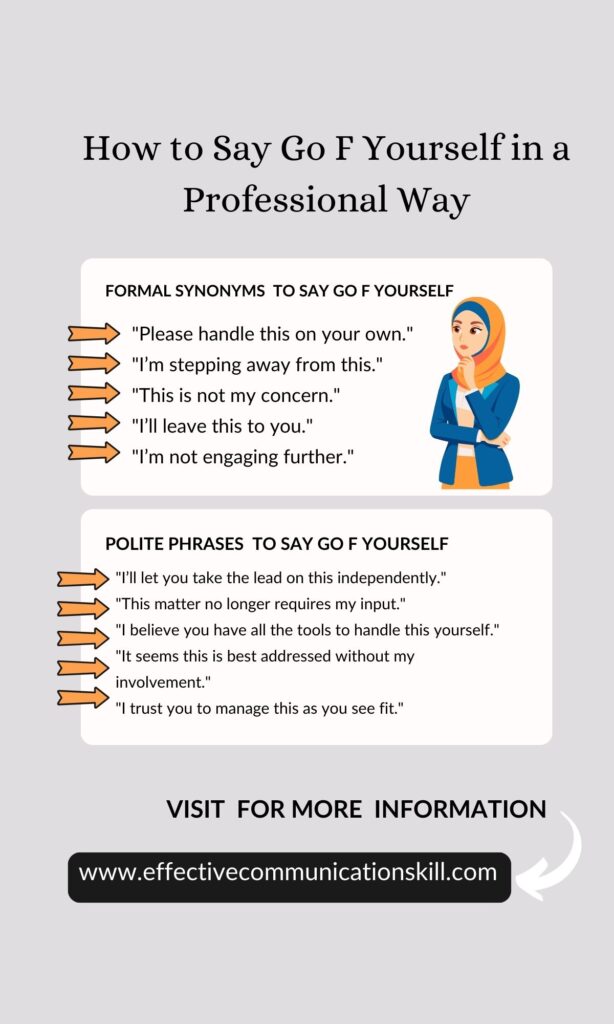
Formal Synonyms to Say Go F Yourself
Here are simple and polite synonyms for “go f yourself”:
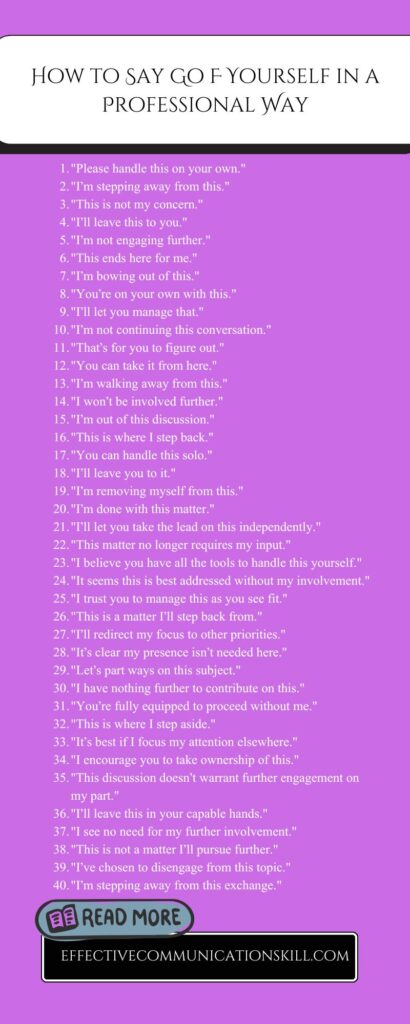
- “Please handle this on your own.”
- “I’m stepping away from this.”
- “This is not my concern.”
- “I’ll leave this to you.”
- “I’m not engaging further.”
- “This ends here for me.”
- “I’m bowing out of this.”
- “You’re on your own with this.”
- “I’ll let you manage that.”
- “I’m not continuing this conversation.”
- “That’s for you to figure out.”
- “You can take it from here.”
- “I’m walking away from this.”
- “I won’t be involved further.”
- “I’m out of this discussion.”
- “This is where I step back.”
- “You can handle this solo.”
- “I’ll leave you to it.”
- “I’m removing myself from this.”
- “I’m done with this matter.”
Here you like How to Say Have a Good Day Professionally (200 Formal Synonyms, Phrases and Sentences)
Formal Phrases to Say Go F Yourself
Here are some formal, unique, and original phrases to say go f yourself:
- “I’ll let you take the lead on this independently.”
- “This matter no longer requires my input.”
- “I believe you have all the tools to handle this yourself.”
- “It seems this is best addressed without my involvement.”
- “I trust you to manage this as you see fit.”
- “This is a matter I’ll step back from.”
- “I’ll redirect my focus to other priorities.”
- “It’s clear my presence isn’t needed here.”
- “Let’s part ways on this subject.”
- “I have nothing further to contribute on this.”
- “You’re fully equipped to proceed without me.”
- “This is where I step aside.”
- “It’s best if I focus my attention elsewhere.”
- “I encourage you to take ownership of this.”
- “This discussion doesn’t warrant further engagement on my part.”
- “I’ll leave this in your capable hands.”
- “I see no need for my further involvement.”
- “This is not a matter I’ll pursue further.”
- “I’ve chosen to disengage from this topic.”
- “I’m stepping away from this exchange.”
- “This is an avenue I won’t explore further.”
- “I believe this conversation has reached its conclusion.”
- “It’s best if you handle this directly.”
- “I’ll focus my energy where it’s more impactful.”
- “This is a matter I’ll remove myself from.”
- “You seem more suited to handle this independently.”
- “I’ll step aside and allow you to lead.”
- “This is a topic I’ll refrain from engaging in further.”
- “It’s clear that this is your domain to navigate.”
- “I’ll leave this matter entirely in your hands.”
Funny Yet Professional to Say Go F Yourself
Here’s a list of funny yet formal, professional, or respectable phrases to say “go f yourself” with a touch of humor:
- “I’m sure you’ve got this all under control, like the lone wolf you are.”
- “I’ll leave you to handle this masterpiece on your own, Picasso.”
- “You seem like you’re in your element—no need for me to steal the spotlight.”
- “I’m going to let you work your magic here—don’t mind me, I’ll be over here being completely unnecessary.”
- “Clearly, you’re the expert here, so I’ll be cheering you on from a safe distance.”
- “I have no doubt you’ll manage this beautifully without my interference, as always.”
- “I’ll step back and let you tackle this mountain, Hercules.”
- “You seem to have this covered like a pro—don’t worry about me, I’ll be the audience.”
- “I’ll give you the space to work your genius, while I go do something less important.”
- “I’ll gracefully bow out of this one—don’t let me slow down your brilliance.”
- “You’re clearly on a roll, so I’ll just stay out of your way while you continue being awesome.”
- “This is a job for someone with your unparalleled skills. I’ll just be over here, not getting in the way.”
- “No need for me to jump in, you’ve got this covered like a pro—go forth and conquer.”
- “I’ll leave you to your greatness while I go tend to more trivial matters.”
- “You’re handling this like a champ, so I’ll just sit back and admire the show.”
- “You’ve got this under control, so I’ll be over here doing absolutely nothing.”
- “I’m just going to let you work your magic. I wouldn’t want to disrupt the flow of your brilliance.”
- “I’ll leave this challenge to you, since you seem to thrive on the impossible.”
- “I think it’s best I take a step back and let you be the hero in this story.”
- “Go ahead, you’ve earned it! I’ll be watching from the sidelines while you win the day.”
100 Useful Sentences to Say Go F Yourself Professionally In Several Settings
These professional sentences for saying go f yourself are designed to help you handle a variety of situations, from workplace conflicts to difficult conversations, without compromising your dignity.
Handling Workplace Disagreements Professionally
- “I think we have differing viewpoints here, and it’s best we agree to disagree.”
- “Let’s pause this discussion and revisit it when we’ve both had time to reflect.”
- “I don’t believe this conversation is yielding productive results, so let’s table it for now.”
- “I’m afraid we’re not on the same page, so I’ll leave this for someone else to handle.”
- “I don’t think further discussion will be productive at this moment.”
- “It appears we’ve reached an impasse; let’s step back and reconsider our approaches.”
- “We have different perspectives, and it’s clear this is not going to resolve quickly.”
- “I’m not in a position to agree with that right now, so I’ll let it be.”
- “I’ll take some time to consider your point of view before continuing this conversation.”
- “Perhaps we should revisit this topic once we both have a clearer understanding.”
Here you like How to Say What’s Up Professionally (200 Formal Synonyms, Phrases and Sentences)
Responding to an Overbearing Client or Customer
- “I understand your concerns, but I’ll need some time to review all the options thoroughly.”
- “I appreciate your input, but I believe we should stick to the original plan.”
- “I’ll need to step back and reassess this situation before proceeding.”
- “Thank you for your feedback, but I’m afraid I won’t be able to accommodate that request.”
- “Let me get back to you once I have had a chance to discuss this internally.”
- “I believe we’ve covered all the points, and I’m afraid there’s not much more to add.”
- “I’m unable to make any further adjustments at this time, but I appreciate your understanding.”
- “I can only offer so much flexibility here; we’ll need to proceed with the next steps.”
- “I’m afraid I can’t go any further with this request, but thank you for your understanding.”
- “I’ll have to decline that suggestion, as it doesn’t align with our current direction.”
Dealing with Inappropriate Comments or Behavior
- “I don’t think that’s an appropriate comment for this discussion.”
- “Let’s keep our conversations professional and focus on the matter at hand.”
- “I believe we need to redirect the conversation to something more relevant.”
- “That comment is out of line and doesn’t contribute to the discussion.”
- “I’m not comfortable with that tone, so I’d appreciate a more respectful exchange.”
- “I’d like to maintain a professional dialogue here, so let’s keep things civil.”
- “I don’t think that was necessary, and I’d prefer we keep things professional.”
- “I’d appreciate it if we could keep the conversation respectful and focused.”
- “That type of remark doesn’t help resolve the issue at hand.”
- “Let’s move forward without any further unnecessary comments.”
Managing Workplace Conflict with Diplomacy
- “I think we’ve covered everything that needs addressing for now.”
- “Let’s put this issue aside and revisit it at a later time when we’re both clearer.”
- “I’ll take some time to think about this before we continue our discussion.”
- “We seem to be at an impasse, so I’ll step away for the time being.”
- “Let’s put a pin in this conversation and approach it again later.”
- “I think it’s best if we pause this for now and return when we’re both in a better place to talk.”
- “It seems like we need to take a break from this issue and look at it from a new perspective.”
- “I think we both need some time apart to reflect before proceeding.”
- “We’ll have to leave this for now and come back with a more constructive approach.”
- “I’ll step back from this conversation until we’re both ready for a more productive discussion.”
Refusing a Request Firmly but Politely
- “I’m unable to fulfill that request at the moment, but thank you for understanding.”
- “I’m afraid that’s not something I can accommodate right now.”
- “I appreciate you asking, but I must respectfully decline.”
- “Unfortunately, I can’t comply with that request, as it’s not feasible.”
- “I’m going to have to pass on that, but thank you for considering me.”
- “I won’t be able to assist with that, but I appreciate your suggestion.”
- “I’m not in a position to help with this at this time.”
- “I can’t provide the assistance you’re asking for right now.”
- “That’s outside my scope, and I won’t be able to support it.”
- “Unfortunately, I have to decline, as I can’t commit to that request.”
Expressing Frustration without Burning Bridges
- “I can see where you’re coming from, but I’ll need to take a step back from this.”
- “This isn’t quite what I expected, but I’m sure we can find common ground.”
- “I think we’re not quite aligned on this, and I’ll need time to process it.”
- “I’m feeling a bit frustrated, so I’ll step away and return to this later.”
- “This has been a bit challenging, but I’ll take a break and revisit it soon.”
- “I understand your position, but I need some time to collect my thoughts.”
- “I’m not in a place to continue this discussion productively right now.”
- “This conversation has become a bit overwhelming, so I’ll pause for now.”
- “I think we’re at a point where we both need to step away and reflect.”
- “I’m a bit frustrated, so I’m going to take a step back for now.”
Exiting a Toxic Situation Gracefully
- “I think it’s best if we wrap this up and revisit it at a later time.”
- “I’m going to step back and allow you to handle this from here.”
- “This isn’t the healthiest direction, so I’ll bow out now.”
- “I’ll leave you to handle this situation, as I don’t think I can contribute constructively at this point.”
- “It seems best for me to step away from this situation for my own well-being.”
- “I’m choosing not to engage in this further and will step aside.”
- “I believe we’ve reached an unhealthy point, and I’ll remove myself from this conversation.”
- “This situation isn’t conducive to progress, so I’ll excuse myself.”
- “I think we need a break from this exchange, so I’ll withdraw for now.”
- “I’ll step back for the moment as I don’t feel this environment is productive.”
Standing Up for Yourself in a Respectful Manner
- “I think I’ve been clear on my stance, and I’ll leave it at that.”
- “I understand your perspective, but I’ll maintain my position.”
- “I’m confident in my viewpoint, so I’ll respectfully stick to it.”
- “I think I’ve made my position known, and there’s nothing more to add.”
- “I’m not in agreement, but I appreciate your input.”
- “I’ve spoken my piece, and I don’t believe further discussion will be necessary.”
- “I see where you’re coming from, but I stand firm in my stance.”
- “I feel I’ve made my point, and I’m happy to leave it there.”
- “I believe I’ve said enough on the matter, so I’ll refrain from adding more.”
- “I’m choosing to remain firm on this issue, and there’s no need for further debate.”
Responding to a Manipulative or Passive-Aggressive Colleague
- “I don’t think this is the right time to discuss this, but I’ll be happy to address it later.”
- “I see your point, but I don’t believe we need to continue down this path.”
- “I’ll leave it to you to handle this in the way you think best.”
- “I’m not sure that comment was necessary, so let’s get back to the task at hand.”
- “I think we’re veering off-topic, so let’s refocus on the issue at hand.”
- “I don’t appreciate the tone, so let’s proceed with a more productive approach.”
- “I understand what you’re saying, but I think we need to approach this differently.”
- “Let’s move forward in a more constructive manner and avoid distractions.”
- “I’ll choose to take a step back from this and let you handle it as you see fit.”
- “I’m not comfortable continuing this conversation with that approach.”
How to Politely End a Conversation or Meeting
- “I think we’ve covered everything for now; let’s continue this at a later time.”
- “I’ll let you go, as it seems we’re at a natural stopping point.”
- “It looks like we’re finished here, so I’ll step away and let you continue your day.”
- “We’re done for now; let’s reconnect later.”
- “I think we’ve addressed all the key points, so let’s wrap this up.”
- “I’m going to leave you to continue your work, and we can revisit this later.”
- “I’m glad we got through everything; I’ll leave you to focus on other matters.”
- “I think we’ve exhausted the topic for today, so I’ll conclude our meeting here.”
- “We’ve made great progress, so let’s pick this up again later.”
- “I’ll end this conversation here and give you space to take the next steps.”
Conclusion
In challenging professional situations, knowing how to say go f yourself in a professional way can be incredibly useful for maintaining your composure and safeguarding your dignity. It’s important to express frustration or disagreement while remaining polite and constructive.
By using tactful phrases, you can assert your boundaries, avoid conflict escalation, and ensure your message is received without damaging relationships. Whether dealing with overbearing clients, toxic colleagues, or a difficult work environment, these professional responses offer the balance between standing up for yourself and preserving professionalism. Mastering this skill will help you navigate difficult conversations gracefully.